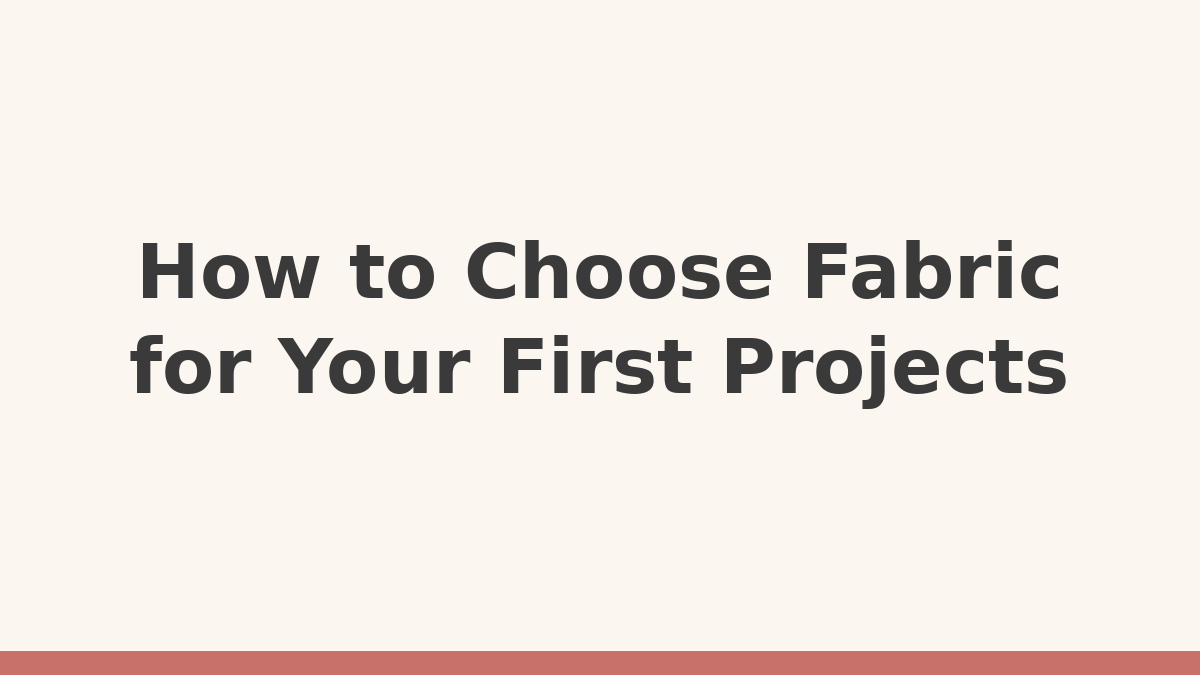
For your first projects, choose a stable, medium-weight woven cotton such as quilting cotton, in a small print or solid you like. Prewash it before you cut, the same way you plan to wash the finished item.
Save stretchy knits, slippery or sheer fabrics and very thick fabrics for later, because they shift, stretch or bunch under the needle and make even a simple straight seam feel hard.
If you are still setting up your machine and basic supplies, start with how to start sewing as a complete beginner, then come back here when you are ready to shop.
What makes a fabric beginner friendly?
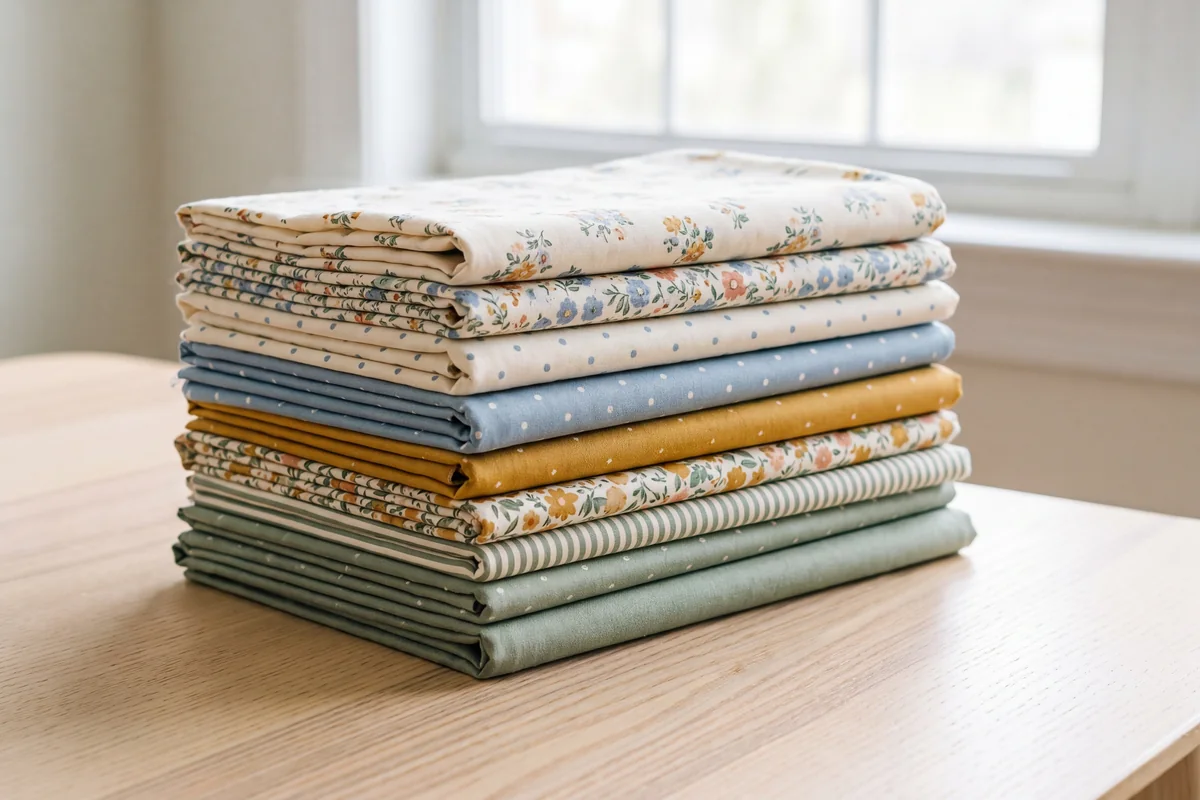
A beginner-friendly fabric is woven, stable, medium weight, presses crisply, and does not fray badly or slip. Those qualities keep the fabric where you put it while you cut, pin and sew.
Knowing how to choose fabric for beginner sewing mostly comes down to checking those five things before you buy. A woven fabric is made from threads crossing over and under each other at right angles, so it barely stretches along its length or width. A knit is made from interlocking loops, which is why it stretches.
Here is why each quality helps:
- Woven and stable: the fabric holds its shape when you pin it and guide it, so your seams stay straight.
- Medium weight: it is not see-through and not stiff. It feeds evenly under the presser foot (the flat metal foot that holds fabric down) and over the feed dogs (the small toothed bars under the needle that move fabric along).
- Presses crisply: folds stay put after ironing, so hems and seam allowances lie flat. The seam allowance is the strip of fabric between your stitching line and the cut edge.
- Low fraying: cut edges shed only a few loose threads, so pieces keep their size while you work.
- Grippy, not slippery: two layers stay together instead of sliding apart as you sew.
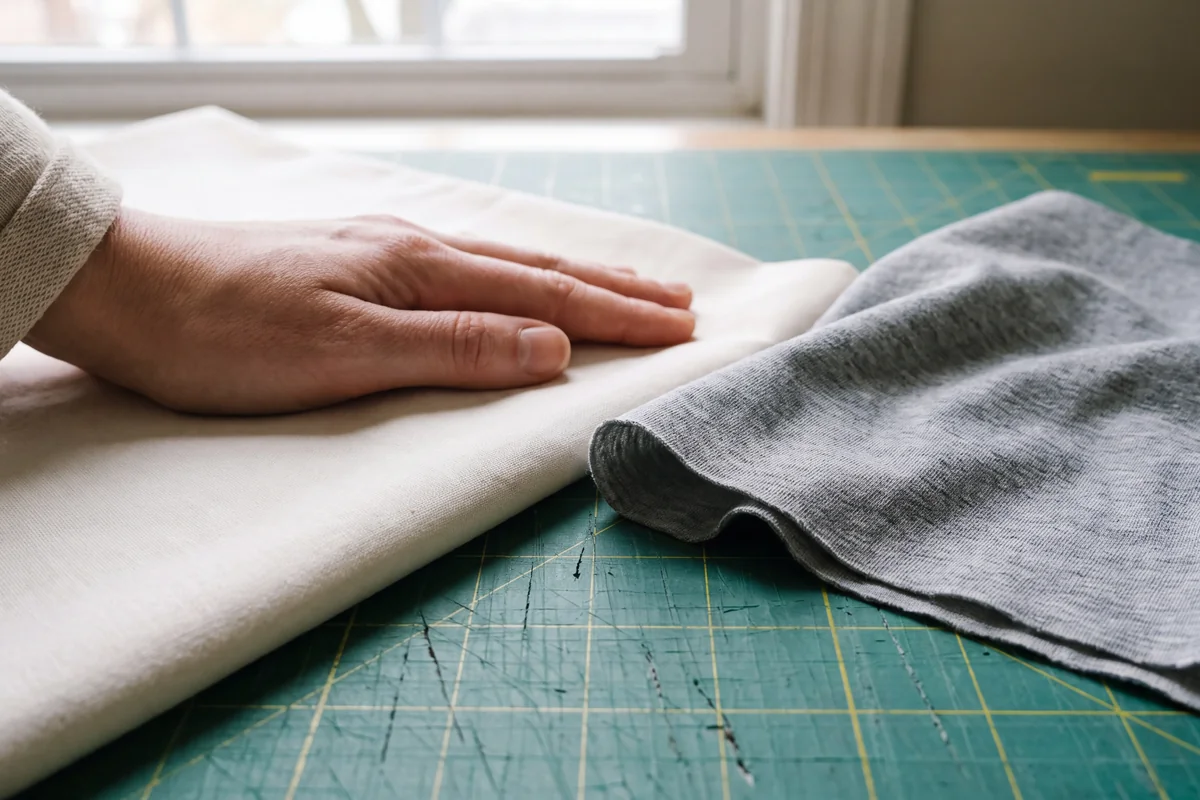
A rough in-shop check: scrunch a corner in your hand for a few seconds. If it holds a crease, it will usually press well. If it springs back completely, it may be a synthetic or a knit that is harder to control.
Good first fabrics to start with
These fabrics are forgiving, widely available and suit most first-year projects.
- Quilting cotton: medium weight, stable and crisp, with a huge range of prints. It is a good fit for pillow covers, pouches, simple aprons and tote linings, though it can feel a little stiff for clothes.
- Cotton poplin: smooth, tightly woven and a little lighter and softer than quilting cotton. It works well for simple garments such as elastic-waist pajama pants.
- Lightweight cotton canvas or duck: sturdier cotton that holds its shape, which makes it a natural choice for tote bags and fabric baskets. Choose the lighter weights at first, because thick layers at the seams need a heavier needle.
- Linen-cotton blends: soft, with a lovely natural texture, and they press well. They fray a little more than quilting cotton and crease easily, so finish the raw edges with a zigzag stitch, one of the basic sewing techniques every beginner should know.
Fabrics to save for later
None of these fabrics is off limits forever. Each one simply adds a challenge on top of learning to sew a straight seam.
- Knits and jersey: they stretch as you sew and curl at the cut edges, and they need stretch stitches and a ballpoint or stretch needle. The difference between woven and knit fabrics is worth learning properly once you have a few cotton projects done.
- Satin: it is slippery, so layers slide apart while you cut and pin, and it shows pin holes and puckers easily.
- Chiffon: it is sheer and very light, so it shifts out of shape while you cut and frays quickly.
- Velvet: its pile (the soft raised surface) makes two layers creep against each other as you sew, and it crushes under a hot iron.
- Heavy denim: thick seams, especially where two seams cross, are hard work for a beginner machine and need a heavy needle.
- Minky: this plush fabric is slippery, slightly stretchy and sheds fluff when you cut it.
How do you read a fabric bolt end or label?
Look for three things: fiber content, width and care instructions. The bolt end is the end of the cardboard board the fabric is wrapped around, and most shops put this information there or on a tag.
Label formats vary between shops and manufacturers, so read whatever is there rather than expecting a set layout.
- Fiber content tells you what the fabric is made of, such as 100% cotton or a cotton and linen blend. This guides your needle choice, your iron setting and how much the fabric may shrink.
- Width is usually given in inches, sometimes with centimeters too. You need it to work out how much fabric to buy.
- Care instructions tell you how to wash and dry the fabric. Prewash it the same way.
If any of these are missing, ask a staff member or check the product listing before you buy.
How wide is fabric?
Quilting cotton is usually about 44 to 45 in (112 to 114 cm) wide. Many apparel fabrics come in wider widths such as 54 to 60 in (137 to 152 cm).
Width matters because a wider fabric fits more pattern pieces side by side, so you often need less length. That is why pattern envelopes usually list fabric quantities by width.
Your usable width is a little less than the width on the label. Prewashing can shrink the fabric slightly, and you trim off the selvages before cutting. If a pattern piece only just fits the stated width, plan for that before you buy.
Are prints or solids easier for beginners?
Small, busy all-over prints are the most forgiving choice. They hide slightly wobbly stitching, uneven topstitching and small marks.
Solids show every stitch. That makes them good for seeing your progress, but less forgiving, so match your thread color closely.
A few print types need more fabric and more planning:
- One-way prints, where every motif faces the same direction, mean every piece must be cut the same way up, which often takes extra fabric.
- Large motifs need careful placement so a big flower does not land in an odd spot.
- Stripes and plaids need lining up at the seams, which is a skill worth saving for later.
How much fabric should you buy?
Buy the amount your project or pattern states for your fabric width, plus a little extra to allow for shrinkage and for straightening the cut end. Making that a habit is more reliable than any general chart.
- Find the fabric quantity on the pattern envelope or in the project instructions, using the row for your fabric’s width. Reading a pattern envelope gets easier with practice, and it is worth slowing down on this step.
- Check whether the quantity changes for one-way prints or fabrics with a nap (a surface that looks different depending on which way it runs).
- Add a little extra for prewash shrinkage and for straightening the end, since shop cuts are not always perfectly straight.
- Buy everything for one project at the same time, ideally from the same bolt, because colors can vary slightly between dye lots (separate batches of the same fabric).
In the US, fabric is usually sold by the yard, which is 36 in (91.4 cm). In the UK it is often sold by the metre, which is about 39.4 in (100 cm). If your pattern and your shop use different units, convert before you buy.
For very small projects, fat quarters are worth knowing about. These are pre-cut pieces, usually about 18 x 21 to 22 in (46 x 53 to 56 cm), and they are an easy way to try a print without buying a full cut.
Buying fabric in person vs online
Buying in person lets you feel the fabric, judge its weight and drape (how it hangs), and see its true color. If you can, buy your first few fabrics this way so you learn what medium weight and crisp actually feel like.
Buying online gives you more choice but less information. A few habits help:
- Read the listing for fiber content, width, weight and care. Weight is often given in ounces per square yard or in gsm (grams per square meter), which is useful for comparing two listings.
- Order a swatch (a small sample) when the shop offers one, especially for garments.
- Remember that colors on screen can look different from the real fabric.
- Check the returns policy, since cut fabric is often not returnable.
Matching thread and needle to your fabric
For medium-weight cotton, all-purpose polyester thread and a universal 80/12 needle are common choices. A straight stitch length of about 2.5 mm is a common starting point on these fabrics.
The two numbers on a needle are its European and US sizes, and a bigger number means a thicker needle. Lighter cottons such as some poplins often sew well with a 70/10, while lightweight canvas usually needs a jeans (denim) needle in 90/14 or heavier. The SCHMETZ needles by fabric type chart matches needle types and sizes to common fabrics if you want to double-check.
Always unplug the machine before changing the needle. Replace a needle that is bent, or one that starts skipping stitches or snagging the fabric. For thread color, a close match or one shade darker than the fabric tends to blend in best.
Before you cut: prewashing, grain and pressing
Three quick habits protect the fabric you just chose.
Prewash: wash and dry the fabric the same way you will wash the finished item, so any shrinkage happens before you cut rather than after you sew.
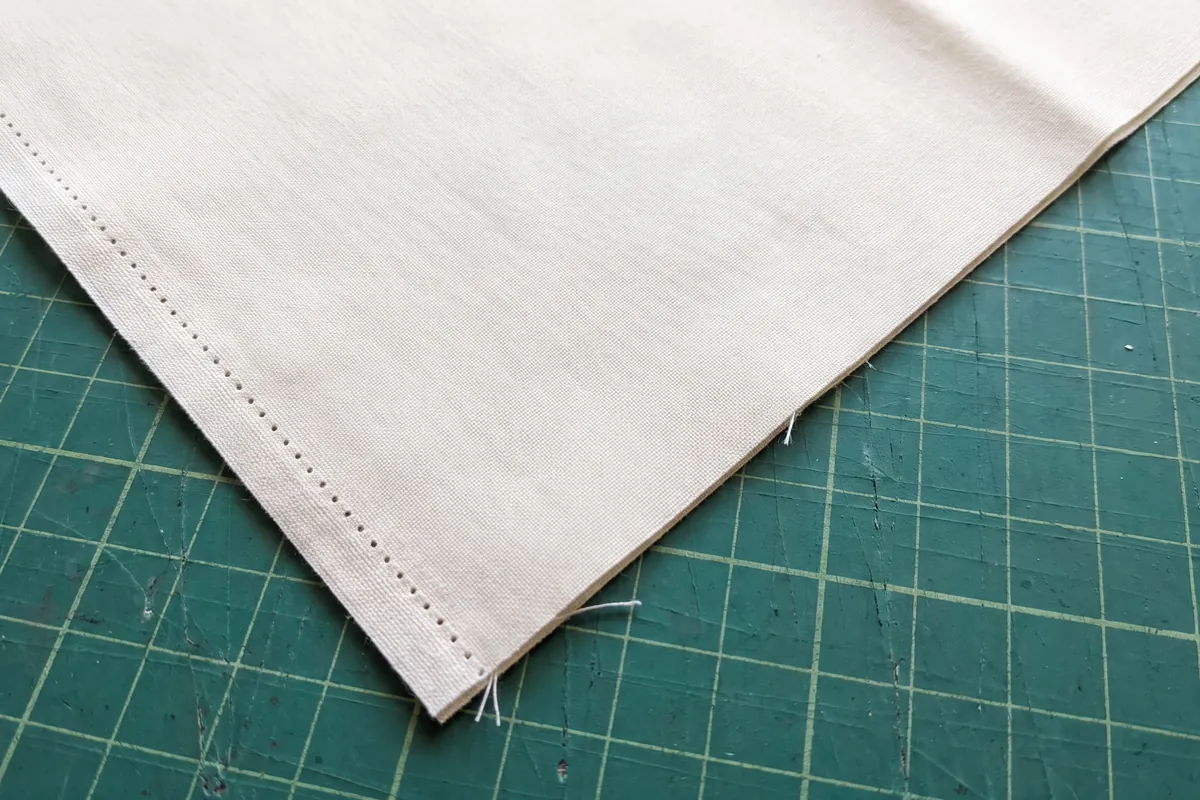
Grain and selvage: the selvage is the firm finished edge along each side of the fabric that does not fray, and the lengthwise grain runs parallel to it. Pattern pieces usually have a grainline arrow that you line up parallel to the selvage.
Pressing: pressing means lifting and lowering the iron instead of sliding it. Follow your iron’s fabric dial for the fiber and test on a scrap first, since cotton and linen usually handle more heat than synthetics, which can melt or turn shiny.
Your first fabric shopping checklist
Take this list with you, in a notes app or on paper:
- A woven cotton: quilting cotton, cotton poplin, lightweight canvas or a linen-cotton blend
- A small print or solid you genuinely like
- Fiber content and care instructions noted
- Fabric width noted
- The pattern’s stated quantity for that width, plus a little extra
- All-purpose polyester thread in a matching color
- Universal 80/12 needles (or 90/14 jeans needles if you chose canvas)
Once your fabric is washed and pressed, a pillow cover, a simple tote or a drawstring bag is a good first project to put it to work.
FAQ
What is the best fabric for a beginner to sew?
A stable, medium-weight woven cotton such as quilting cotton is the easiest choice for most beginners. It presses crisply, frays only a little and does not slip, so it stays where you put it while you cut and sew.
Should I prewash fabric before sewing?
Yes, prewash it the same way you will wash the finished item. That way any shrinkage happens before you cut rather than after you sew.
Why are knit fabrics harder for beginners?
Knits stretch as you sew and curl at the cut edges. They also need stretch stitches and a ballpoint or stretch needle, which adds extra steps while you are still learning straight seams.
How much extra fabric should I buy?
Buy the amount your pattern states for your fabric width, plus a little extra for prewash shrinkage and for straightening the cut end. Buy everything for one project at once, ideally from the same bolt.
What needle and thread should I use for cotton?
For medium-weight cotton, all-purpose polyester thread and a universal 80/12 needle are common choices. Lighter cottons often suit a 70/10, and lightweight canvas usually needs a 90/14 or heavier jeans needle.