The easiest first sewing projects use straight seams on stable woven cotton and do not need to fit a body. Good examples are cloth napkins, a drawstring bag, a tote bag or an envelope pillow cover.
To pick one, start with the project that uses the skills you already have.
Below are seven projects in order, from the easiest to a small step up. Each summary covers what the project is, the skills it uses, a rough fabric amount and why it suits your first year of sewing. The skills themselves (threading, seam allowance, backstitching, pivoting at corners, seam finishes and pressing) are covered in Basic Sewing Techniques Every Beginner Should Know, so they are named here rather than taught again.
What makes a sewing project easy for a beginner?
A project is easy when it uses straight seams, stable woven fabric and a shape that does not have to fit anyone. Woven cotton (fabric made from crossed threads, with very little stretch) stays put under the needle. Squares and rectangles are forgiving: if a seam wanders 1/8 in (3 mm), a napkin or a bag still works.
Garments are different. A small error repeated across several seams changes how a garment fits, which is why clothing can wait until later in your first year.
Easy projects also have few pieces, so you spend more time sewing and less time cutting and matching. Every project on this list is cut from squares or rectangles.
How to choose your first project
Three questions narrow it down quickly.
- How much time do you have? With an hour or so, sew a single napkin or a pair of coasters. With an afternoon, a tote bag is realistic.
- What fabric do you already have? A fat quarter, a pre-cut piece of about 18 x 21 to 22 in (46 x 53 to 56 cm) with the same area as a quarter yard, is enough for coasters or a scrunchie. About 3/4 yd (69 cm) suits a tote, and 1 1/4 yd (1.15 m) a set of four napkins. Leftovers from earlier projects are perfect for scrap projects.
- What skills do you have so far? If you can sew a straight line, backstitch and pivot at a corner, start with napkins, which also teach a simple hem. Once you are ready to turn something right side out, try coasters or the pillow cover. When hems feel comfortable, move on to the drawstring bag and tote.
The time ranges in each summary are rough guides for a first attempt. Going slower is completely fine.
What to have ready
You only need the basics from how to start sewing as a complete beginner, plus a few small extras for some projects.
- Prewashed medium-weight woven cotton. Prewashing means washing and drying the fabric the way you will wash the finished item, so it shrinks before you cut. Quilting cotton works for most projects here.
- All-purpose thread in a matching color.
- A universal 80/12 needle. Unplug the machine before you change the needle.
- Pins or sewing clips.
- Fabric scissors, kept for fabric only.
- An iron on the cotton setting, which is the high heat setting on most irons. Steam is fine on cotton.
Project extras are listed in each summary: cord for the drawstring bag, elastic and a safety pin for the scrunchie, and stuffing or dried lavender for scrap projects. If you cut straight strips with a rotary cutter (a round rolling blade used with a ruler and cutting mat), close the blade every time you set it down.
Seven easy sewing projects, from easiest to a small step up
Fabric amounts below assume quilting cotton about 42 in (107 cm) wide after prewashing and trimming the selvages (the firm, finished edges along each side of the fabric). They also assume a 1/2 in (1.3 cm) seam allowance, the distance between your stitching line and the fabric edge, which is common in small-project tutorials. Basic Sewing Techniques Every Beginner Should Know practices with 5/8 in (1.5 cm), the standard on Big 4 patterns, and its cushion project (number 5 below) keeps that 5/8 in. If you would rather sew everything at 5/8 in, add 1/4 in (6 mm) to the length and width of each cut piece below, except the napkins, whose hems are measured separately. The fabric amounts still cover it.
Sizes are common conventions, not fixed rules. Check the pattern or tutorial you follow for exact amounts.
1. Cloth napkins
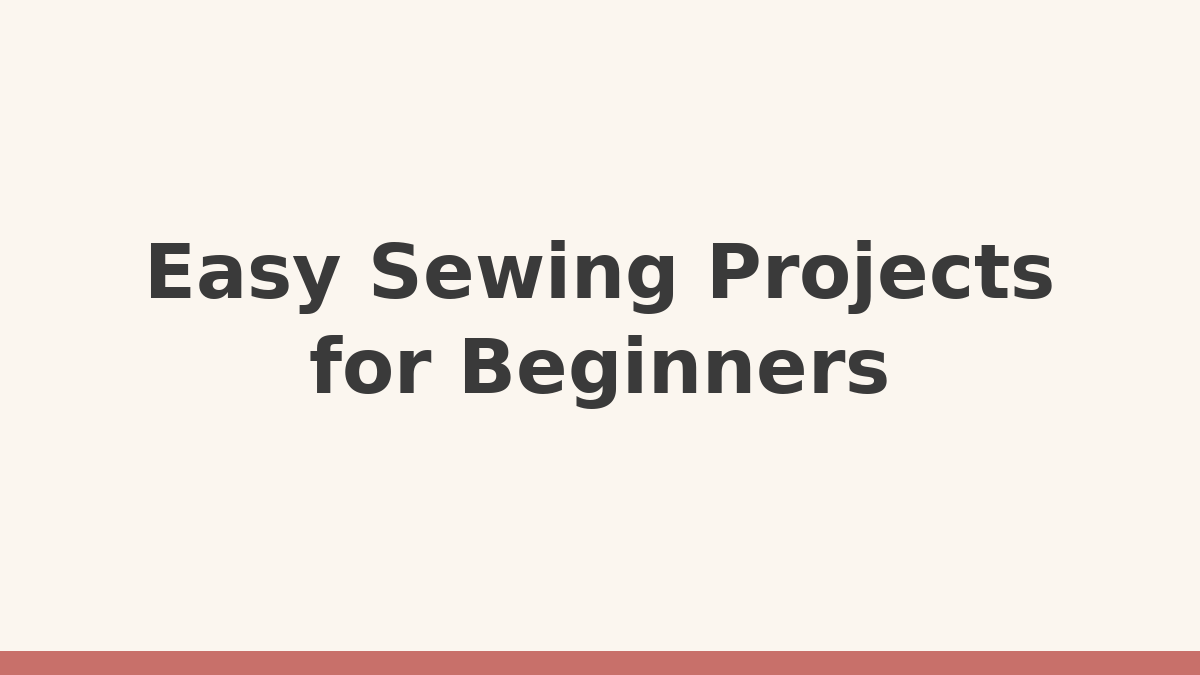
Cloth napkins are hemmed squares of cotton, and they are the easiest project on this list. A common finished size for dinner napkins is 18 in (46 cm) square.
- Skills: a double-fold hem (the edge folded over twice and stitched, so no raw edge shows), pressing, and pivoting at the corners.
- Fabric: about 1 1/4 yd (1.15 m) of quilting cotton for a set of four. Each napkin is cut 20 in (51 cm) square, which leaves room for a 1/2 in (1.3 cm) hem folded twice on every side.
- Why it suits a beginner: there is one piece of fabric, four straight edges and nothing to join together. A set of four gives you four chances to practice the same hem in one sitting.
- Rough time: about 1 to 2 hours for a set of four.
2. Fabric coasters
Fabric coasters are small squares made from two layers of cotton sewn together, turned right side out and stitched around the edge. A common finished size is 4 in (10 cm) square. You can add an optional layer of fusible fleece (thin padding you iron on) for thickness.
- Skills: sewing with right sides together (the printed faces touching), pivoting at corners, leaving a gap to turn through, turning and pressing, and topstitching (a visible line of stitching close to the edge) to close the gap.
- Fabric: one fat quarter is enough for a set of four. Each coaster uses two 5 in (12.7 cm) squares, and a fat quarter fits 12 squares.
- Why it suits a beginner: it is small and quick, and it introduces turning a shape right side out, a skill you will use again in the pillow cover and scrap projects.
- Rough time: about 1 to 2 hours for a set of four.
3. Drawstring bag
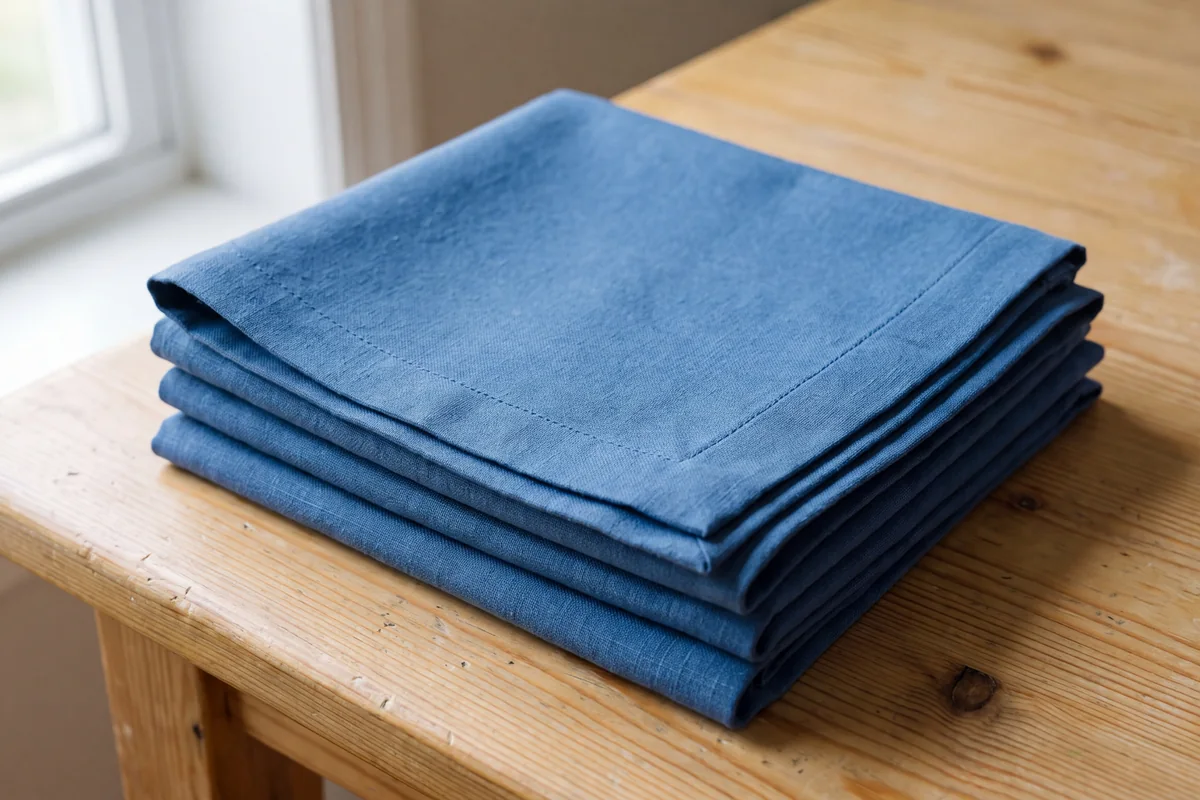
A drawstring bag is a rectangle folded in half and sewn up the sides, with a channel at the top for a cord. A common size is about 10 x 12 in (25 x 30 cm), handy for shoes, toys or wrapping a gift.
- Skills: straight side seams, a casing (a hem folded wide enough to make a channel for the cord), and threading the cord through with a safety pin.
- Fabric: about 1/2 yd (46 cm) of quilting cotton, cut as one 11 x 27 in (28 x 69 cm) rectangle, plus about 1 yd (91 cm) of cord or ribbon.
- Why it suits a beginner: the seams are short and straight, and the casing is a wider version of the hem you sewed on napkins. Pulling the cord closed for the first time is a quick, visible win.
- Rough time: about 1 to 2 hours.
4. Simple tote bag
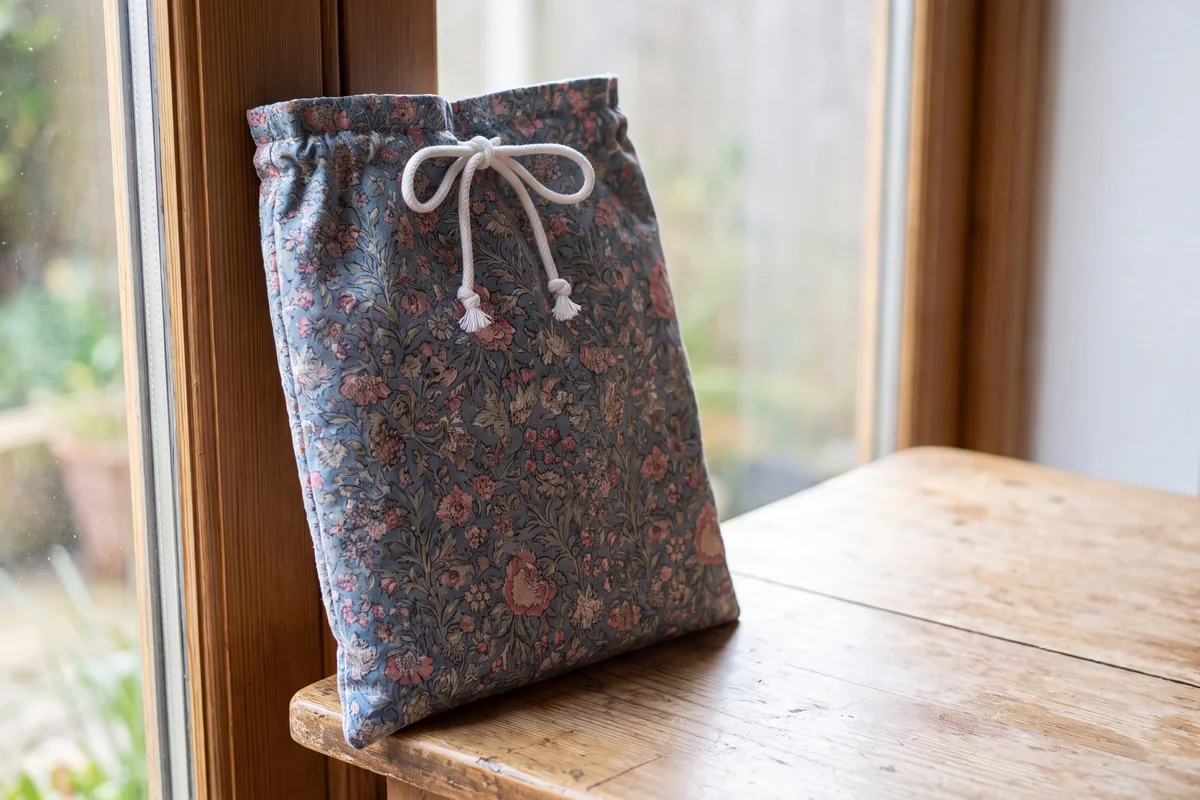
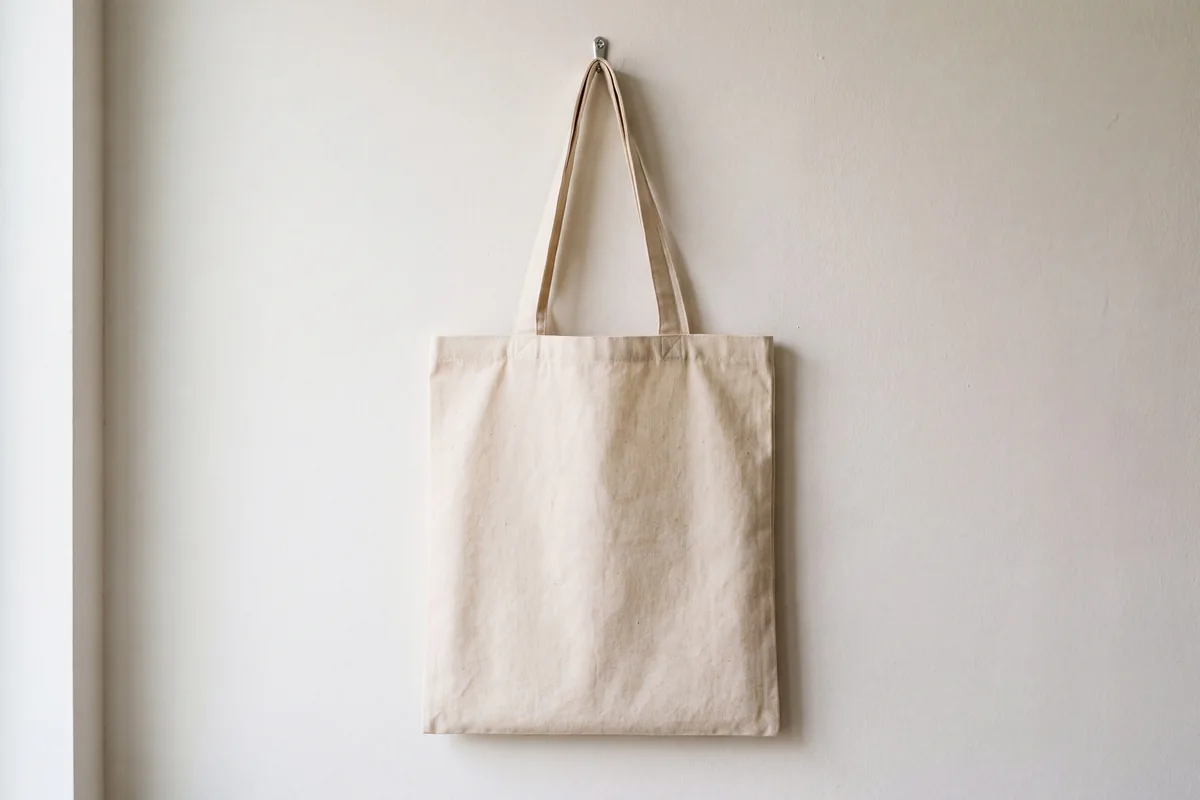
A simple tote is a folded rectangle with two side seams, a hemmed top and two straps. A common finished size is about 14 x 15 in (36 x 38 cm), big enough for library books or a few groceries.
- Skills: straight side seams, a seam finish on the inside edges (an unlined tote shows its seams inside), a double-fold top hem, folding and pressing straps, and stitching the straps on securely.
- Fabric: about 3/4 yd (69 cm) of a sturdier cotton such as canvas or duck, or 1 yd (91 cm) if the print has a clear top and bottom. Cut one 15 x 33 in (38 x 84 cm) body piece and two 4 x 24 in (10 x 61 cm) strap strips. A 90/14 jeans (denim) needle is a common choice for canvas.
- Why it suits a beginner: the pieces are bigger, but every line is still straight, and you will use the finished bag often. The thick spots where the straps meet the top hem are the main challenge, so sew slowly there.
- Rough time: about 2 to 3 hours.
5. Envelope pillow cover
An envelope pillow cover is a cushion cover with an overlapping opening on the back, so the pillow insert slides in with no fastening. It uses straight seams, simple hems on the two back edges, pivoting at corners and turning right side out. The cushion project in Basic Sewing Techniques Every Beginner Should Know has the full steps and fabric amounts.
- Fabric: about 1 yd (0.9 m) of quilting cotton for a 16 in (40 cm) square cushion insert, as in that project.
- Why it suits a beginner: the overlapping back means no zipper or buttons to fit, and every seam is straight.
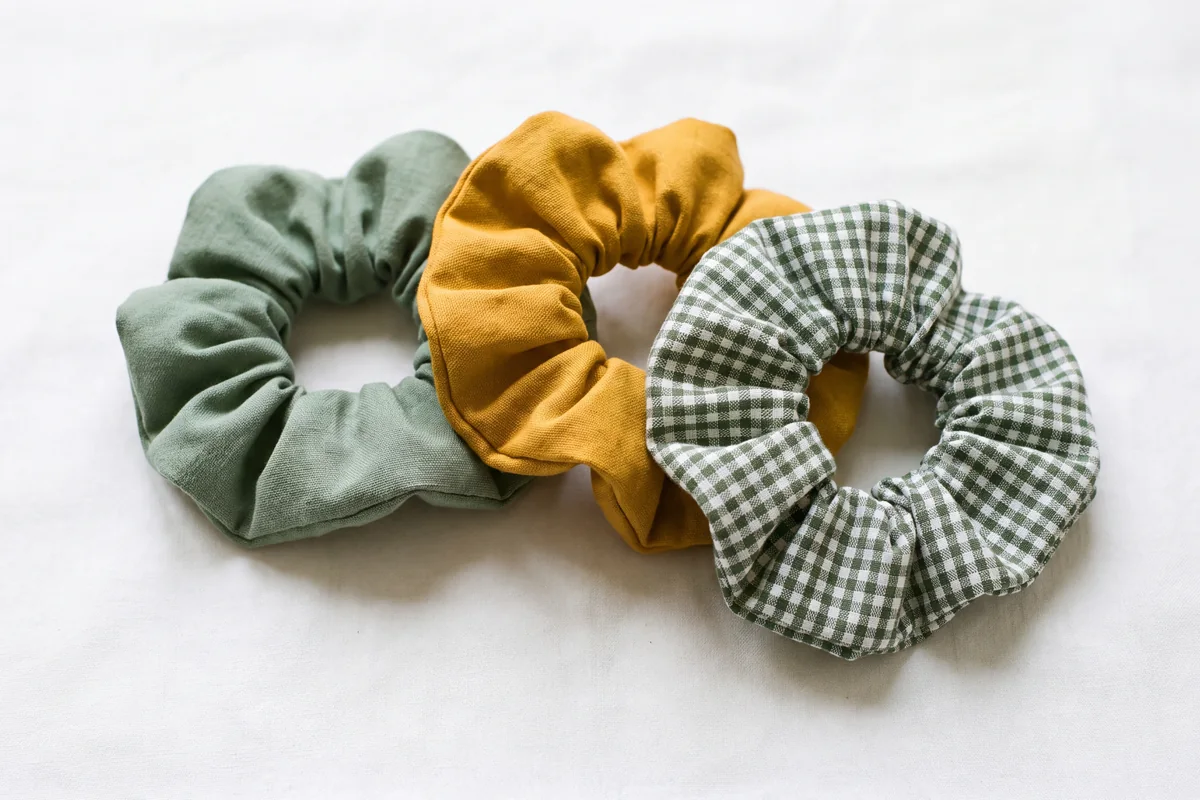
6. Scrunchie (a small step up)
A scrunchie is a fabric tube gathered over a loop of elastic. It is the one project here with elastic and a long tube to turn, so treat it as a small step up rather than a very first project.
- Skills: sewing a long straight seam to form a tube, turning the tube right side out, threading elastic through with a safety pin, joining the elastic ends, and closing a small gap with machine stitching.
- Fabric: a common size is a strip about 4 x 20 in (10 x 51 cm), plus about 8 in (20 cm) of 1/4 in (6 mm) elastic. One fat quarter gives you four strips.
- Why it suits a beginner: it is still small and quick, and it shows you how elastic behaves inside fabric. Turning the long, narrow tube is the fiddly part, so take your time with it.
- Rough time: about 30 minutes to 1 hour.
7. Fabric scrap projects
Scrap projects turn the offcuts from earlier projects into small, useful things: a square pincushion, a lavender sachet or a fabric bookmark. They sit last because the pieces are small and you decide the sizes yourself, which feels easier after a few finished projects.
- Skills: sewing right sides together, pivoting at corners, turning and pressing, filling, and closing the turning gap with machine stitching close to the edge.
- Fabric: no new fabric. A pincushion or sachet uses two 5 in (12.7 cm) squares for a 4 in (10 cm) finished square. A bookmark uses two 3 x 8 in (7.6 x 20 cm) pieces for about 2 x 7 in (5 x 18 cm) finished. Add polyester stuffing or dried lavender as needed.
- Why it suits a beginner: the stakes are low and nothing goes to waste. Small pieces are a little fiddlier under the presser foot (the part that holds fabric flat while you sew), so sew slowly.
- Rough time: about 20 to 45 minutes each.
A simple order to follow
If you want a plan, sew the projects in the order above. Napkins build your hems, coasters add turning, the drawstring bag and tote put both to work on something bigger, and the scrunchie adds elastic.
Fabric choice matters for all of them, and how to choose fabric for your first projects walks through it. For now, a prewashed medium-weight cotton in a small, all-over print is a forgiving choice, because a busy print hides slightly uneven stitching better than a solid color.
FAQ
What is the easiest thing to sew as a beginner?
Cloth napkins are the easiest project on this list: one square of cotton, hemmed on four straight sides. A set of four 18 in (46 cm) napkins needs about 1 1/4 yd (1.15 m) of quilting cotton.
What fabric should I use for my first sewing project?
Use prewashed medium-weight woven cotton, such as quilting cotton. It has very little stretch and stays put under the needle. For a tote bag, a sturdier cotton such as canvas or duck holds its shape better.
Is a scrunchie a good first sewing project?
A scrunchie works better as a small step up than as a very first project. It adds elastic and a long fabric tube to turn, so it is easier after napkins, coasters or a drawstring bag.
How long does an easy sewing project take?
The projects on this list take roughly 20 minutes to 3 hours on a first attempt. A small scrap project takes about 20 to 45 minutes, and a tote bag takes about 2 to 3 hours.